
B2B SaaS, 0-1, Product Design
increase product value of aviation exposure module
Role
Senior UX/UI Designer at Insurwave
Timeline
Jan - Dec 2025
Collaboratively worked with
Lead Product Manager, Solutions Lead Engineer, Product Owner, and Engineering Team
Platform
Web App
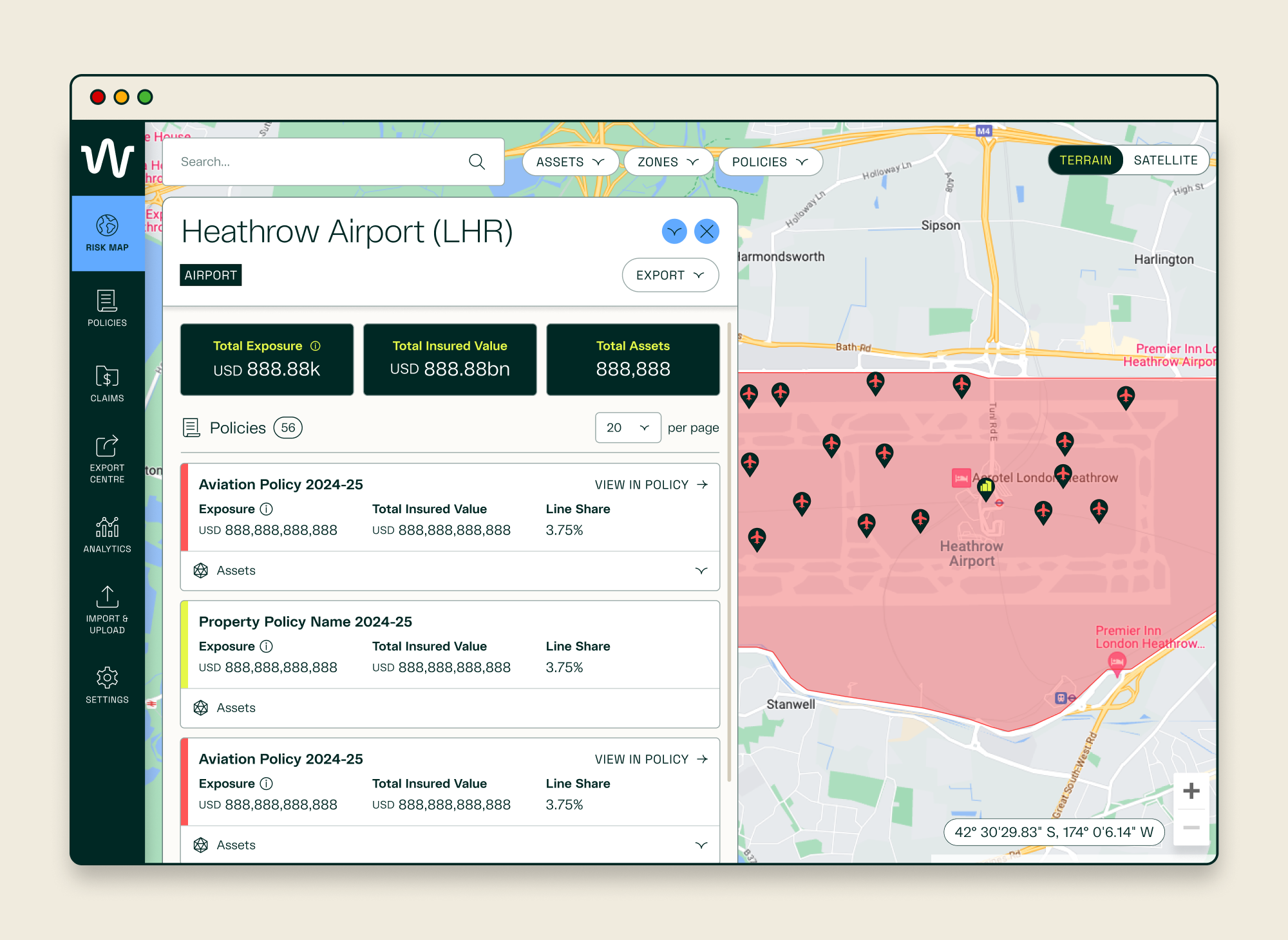
Zone Exposure Panel
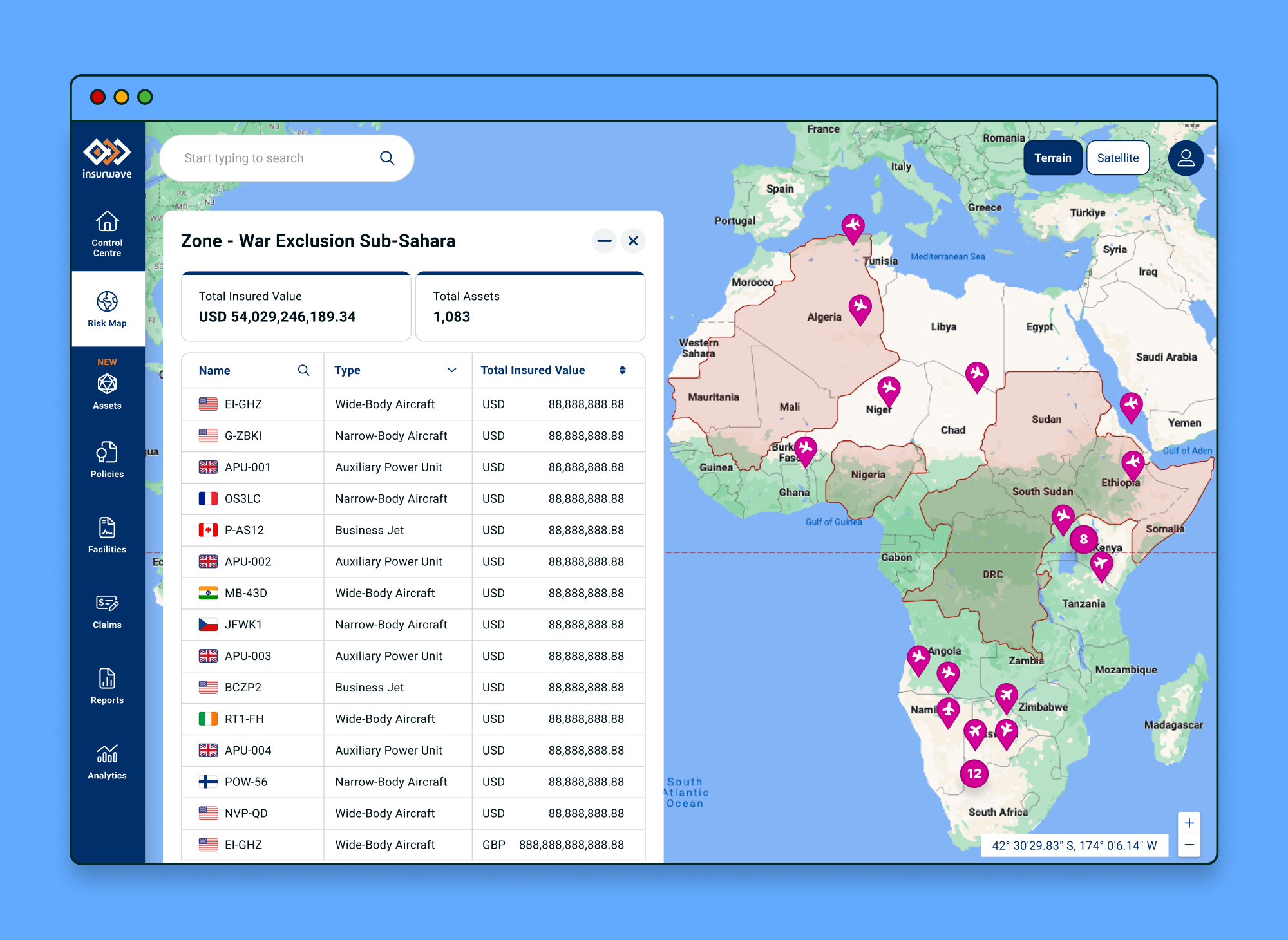
Zone Panel Before
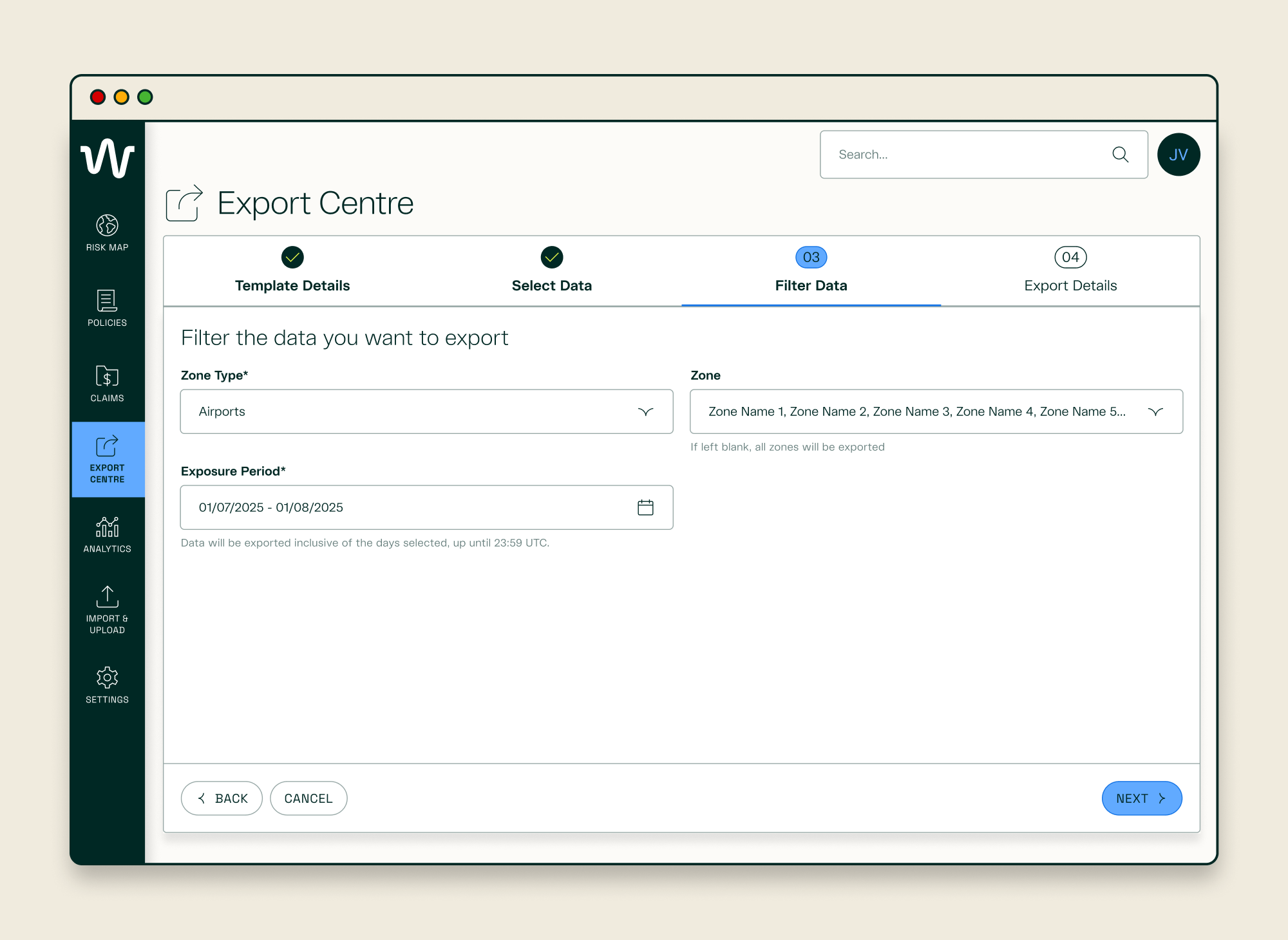
Export Centre - Zone Peak Exposure
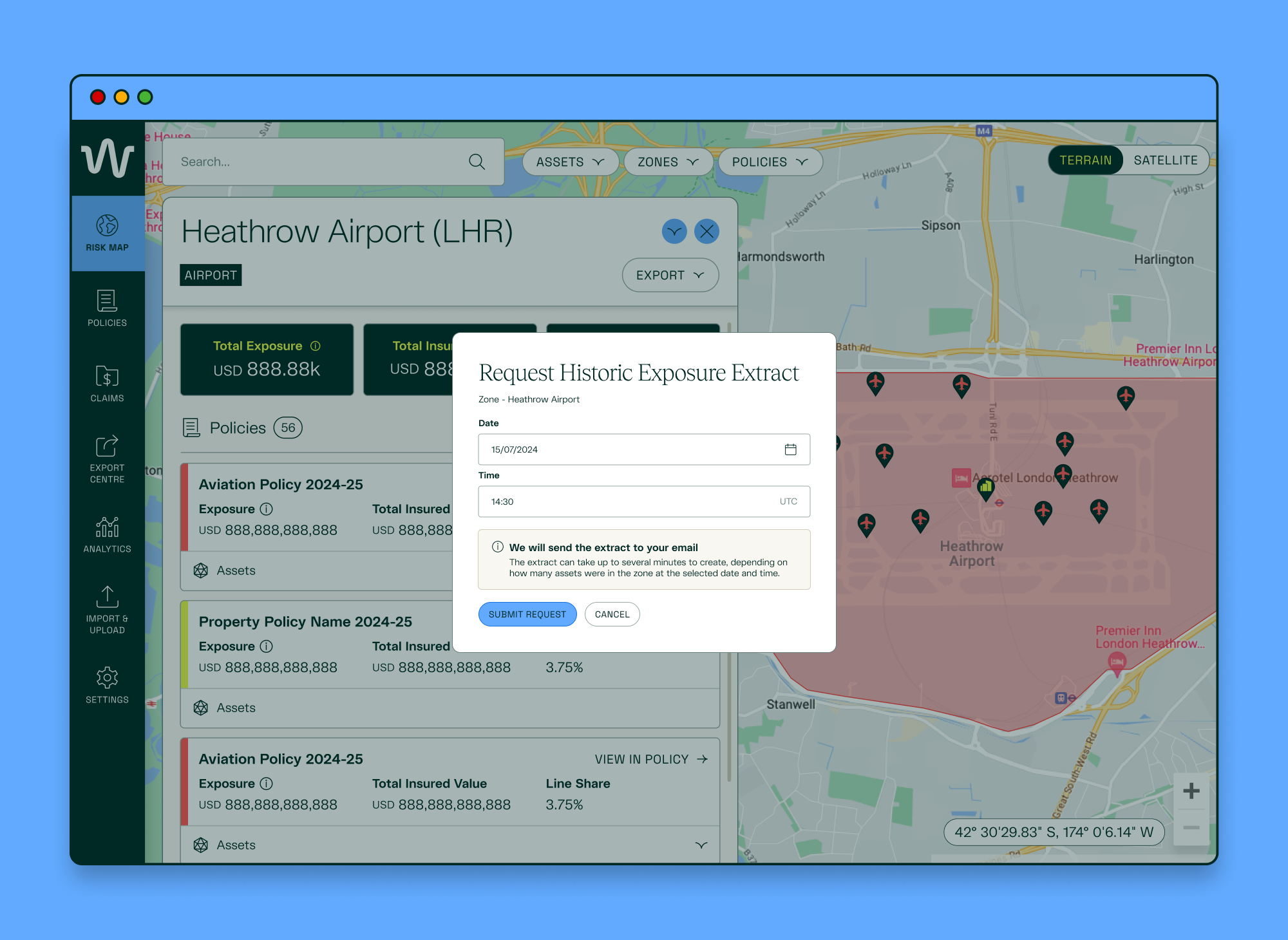
Historic Point-In-Time Zone Exposure
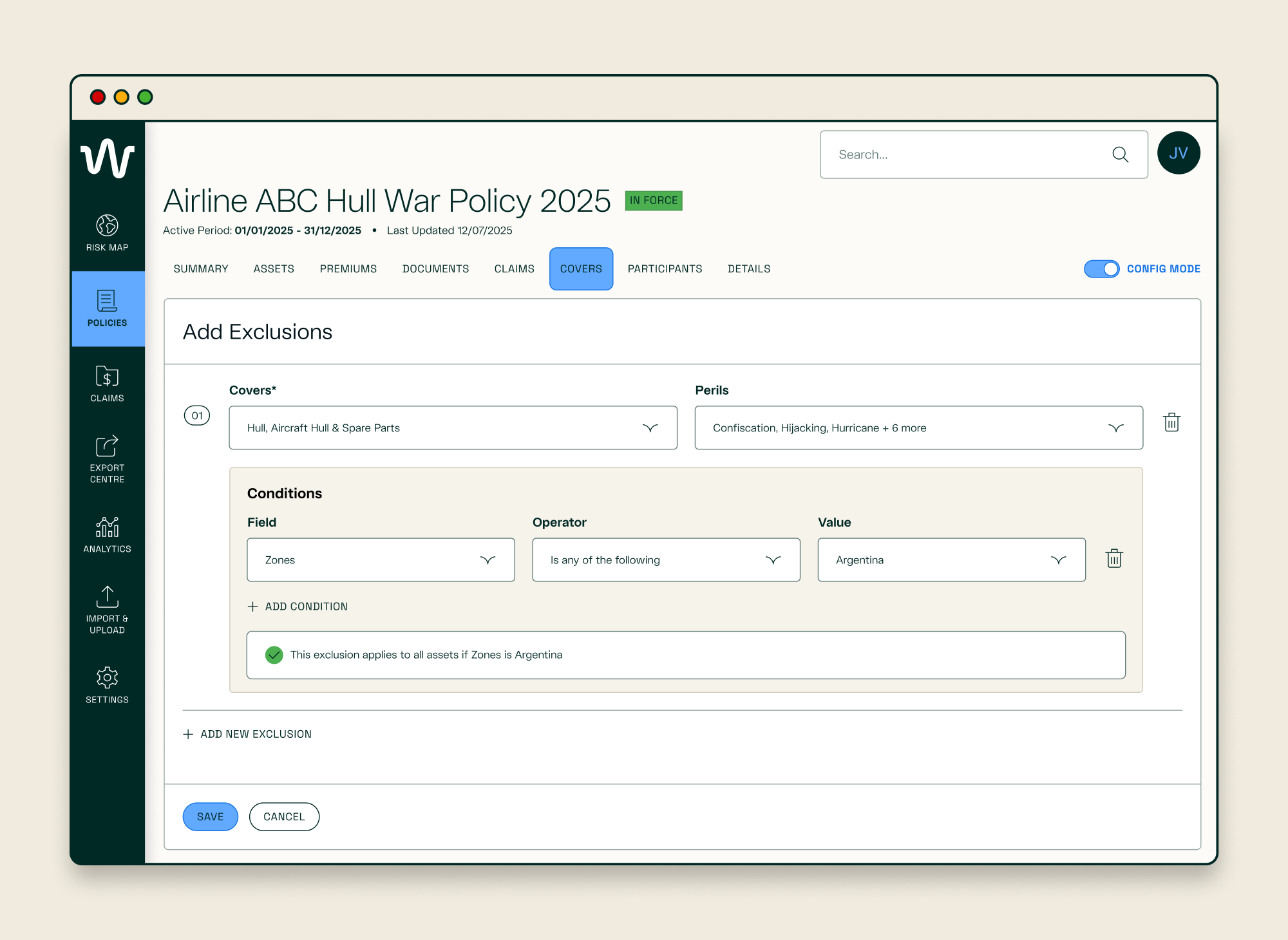
Policy Terms
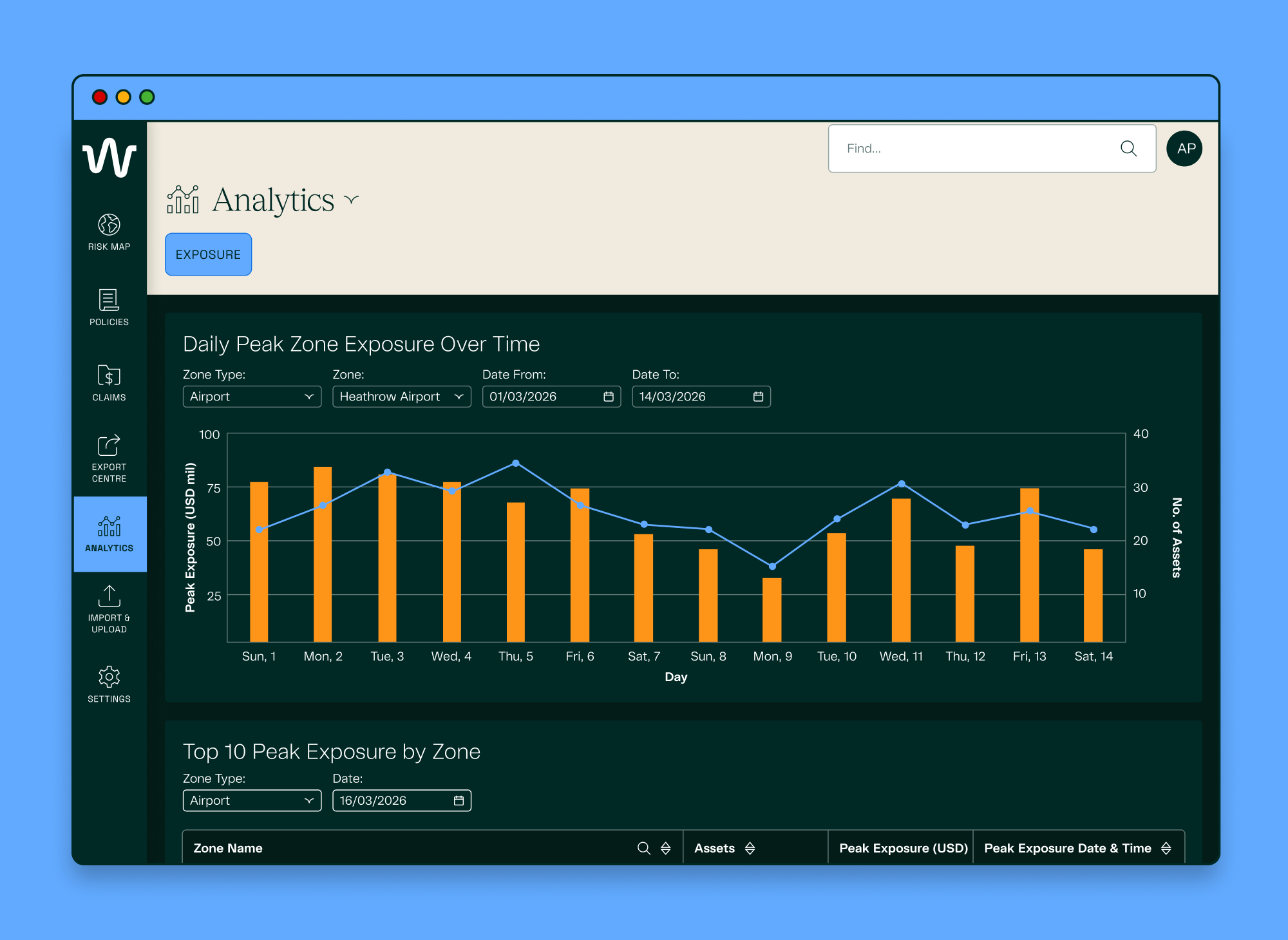
Peak Zone Exposure Analytics
RESULTS
2
New clients
33% conversion rate from sales leads
cross-sold clients
2
14% conversion rate from existing clients on the Marine Control module
100%
retention rate
8 existing clients renewed their annual contract
OVERVIEW
What is Exposure?
Exposure is the accumulation and aggregation of risk, with their respective policy terms applied, in any one geographical area. The value that Insurwave brings to the specialty insurance market is a dynamic view of how much is exposed at any point in time for dynamic risk (such as aircraft and vessels) and static risk (such as properties) in geographical areas defined by zones.
My Role
As the Senior UX/UI Designer, I led Design to Build, closely collaborating with the Product and Engineering teams to deliver five outcomes that enhanced the Exposure product resulting in two new clients, and retaining all eight existing clients.
THE PROBLEM
Prospective and existing clients were providing feedback to Insurwave that if they could receive their exposure calculations as well as tracking their dynamic risk, then they would find greater value in Insurwave.
THE opportunity
How might we design an exposure offering that provides value to Insurers of dynamic lines of business, driving revenue growth from new and existing clients?
By winning new clients, cross-selling to existing clients, and retaining the rest, the business saw an opportunity for revenue growth.
RESEARCH & DISCOVERY
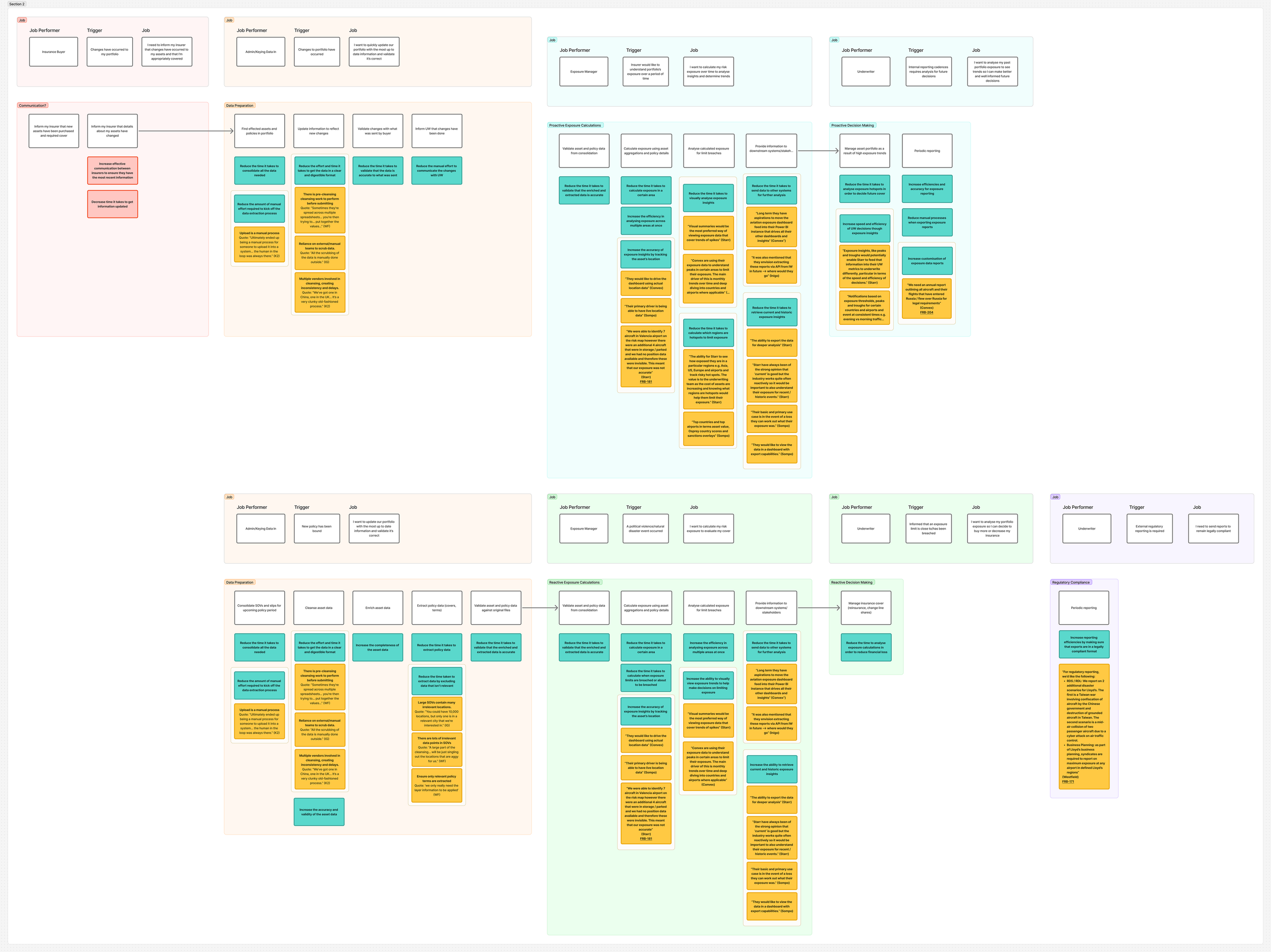
Initial interviews with potential clients were conducted by Sales and Product, with workshops later including Design to completely understand the struggles and problems with their workflows.
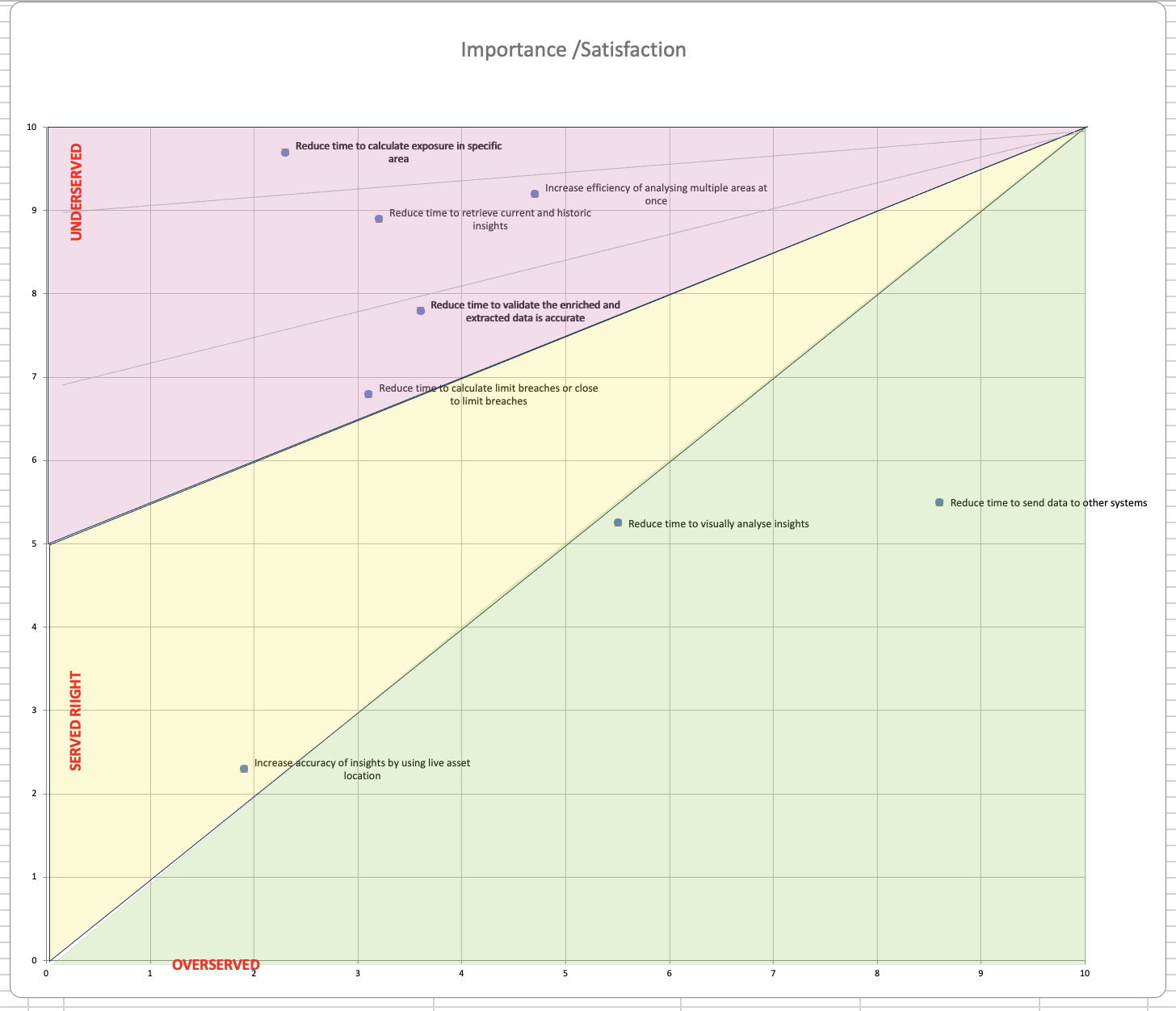
After creating a job map, and in turn an opportunity map using ratings from existing and potential clients, we were able to validate which outcomes were the most underserved and would provide the most value when creating the Aviation Exposure product. They were:
Reduce time to calculate exposure in a specific area
Increase efficiency of analysing multiple zones at once
Reduce time to retrieve current and historic insights
Reduce time to calculate limit breaches or close to limit breaches
During this process, there were changes in the Aviation insurance industry that required them to know where their insured aircraft were at all times, which further boosted Insurwave as an ideal solution, due to our existing functionality to track dynamic risks.
DESIGN SPRINT & WORKSHOPS
With assumptions of desirability being validated through the user interviews, and viability being validated by the new strategic direction from senior leadership, we were now at the point to test feasibility.
After consolidating research on what existing and potential clients would be interested in, but also confirming how they currently calculate their exposure, we ran a design sprint with Product, Engineering, Design, and Data to investigate how we could design a solution that utilised current features, what we would need to additionally build to make it successful, and highlighted any major concerns or blockers.
We broke down the product roadmap into five outcomes so that we could iteratively release value, gain feedback after each one, and then consolidate enhancements with the next iteration.
outcomes
calculate & export current zone exposure
Using existing calculations of Total Insured Value (TIV) of an asset, coupled with tracking data, we could calculate the Total TIV of all assets within a zone. The outcome was to display these calculations on the UI, so I redesigned the current Zone panel to include all of this information, and also include the policies that these assets were on.
With Zone Exposure data now available on the platform UI, users gave us feedback that they would like to extract the data so that they could ingest it into downstream forecasting systems. We designed an Excel extract that was formatted in a way that multiple clients could use in their downstream systems, and updated the UI to easily export this data from the Zone Exposure panel.
historic point-in-time zone exposure
The natural evolution (and validated from feature requests) was being able to generate an extract for Zone Exposure for a specific date and time. This required designing from Engineering for the back-end logic to make sure the data being used was as accurate as possible for the Exposure calculations, but also updates to the UI to allow users to request the extract.
POLICY TERMS ON THE PLATFORM
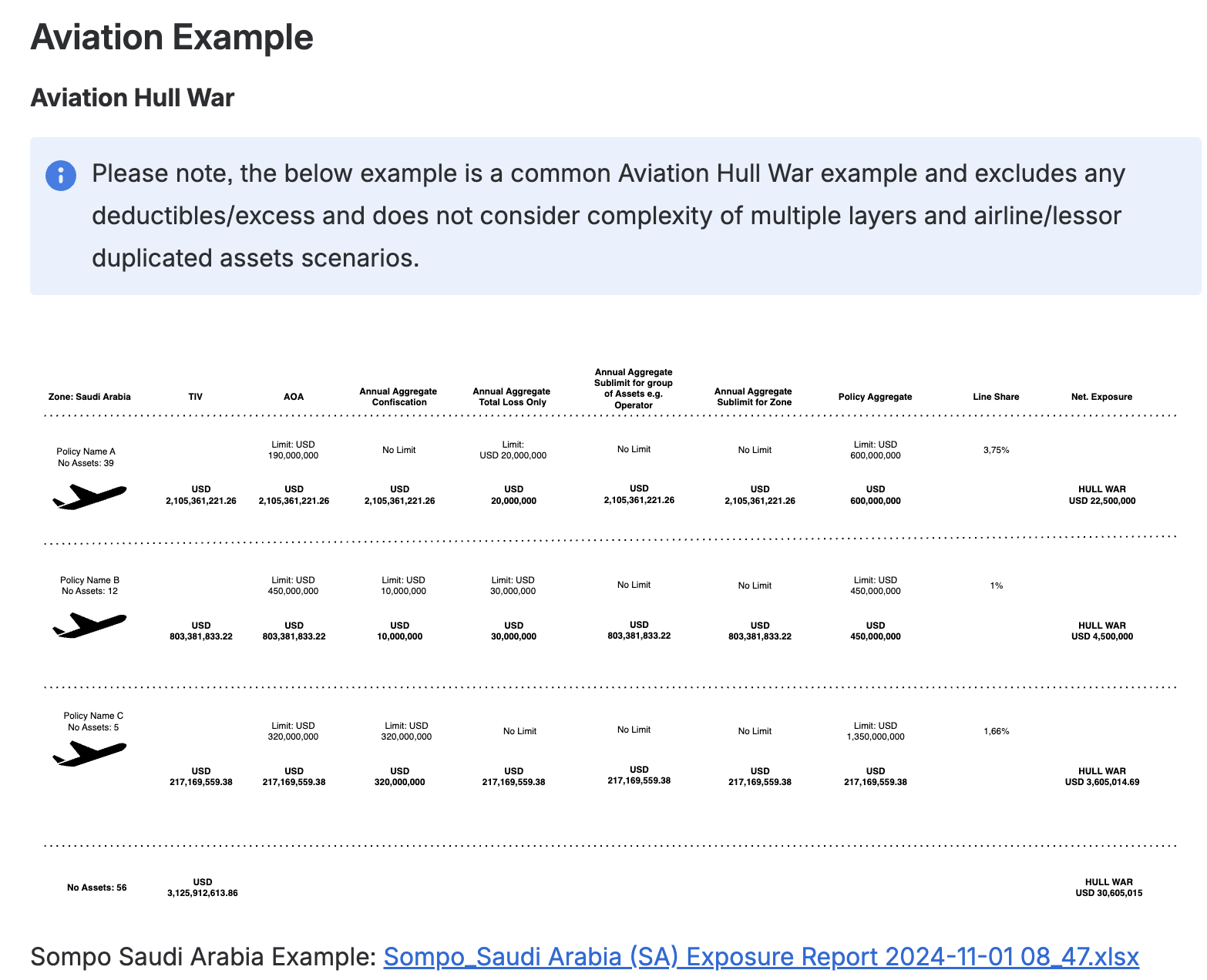
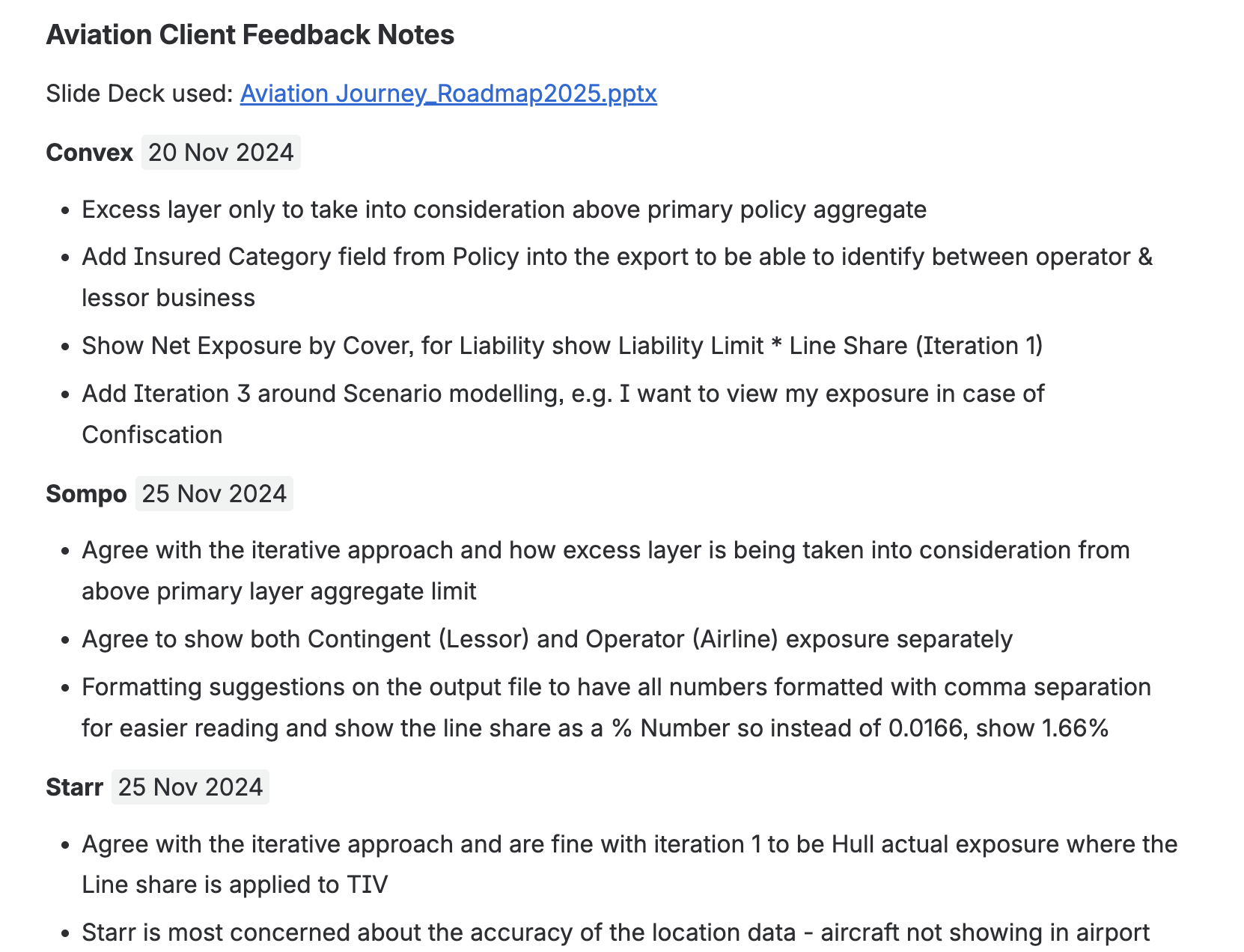
After some more user feedback, to calculate ‘True Exposure’, the calculations had to also include policy terms, such as Line Share, Limits, and Exclusions. In order to use these in calculations, they needed to be added and stored on the platform, which they currently weren’t. We updated the Covers section in Policies to include Perils, Limits, Exclusions, and Deductibles and any conditions, so that we could start aiming for a True Exposure calculation.
historic range zone peak exposure
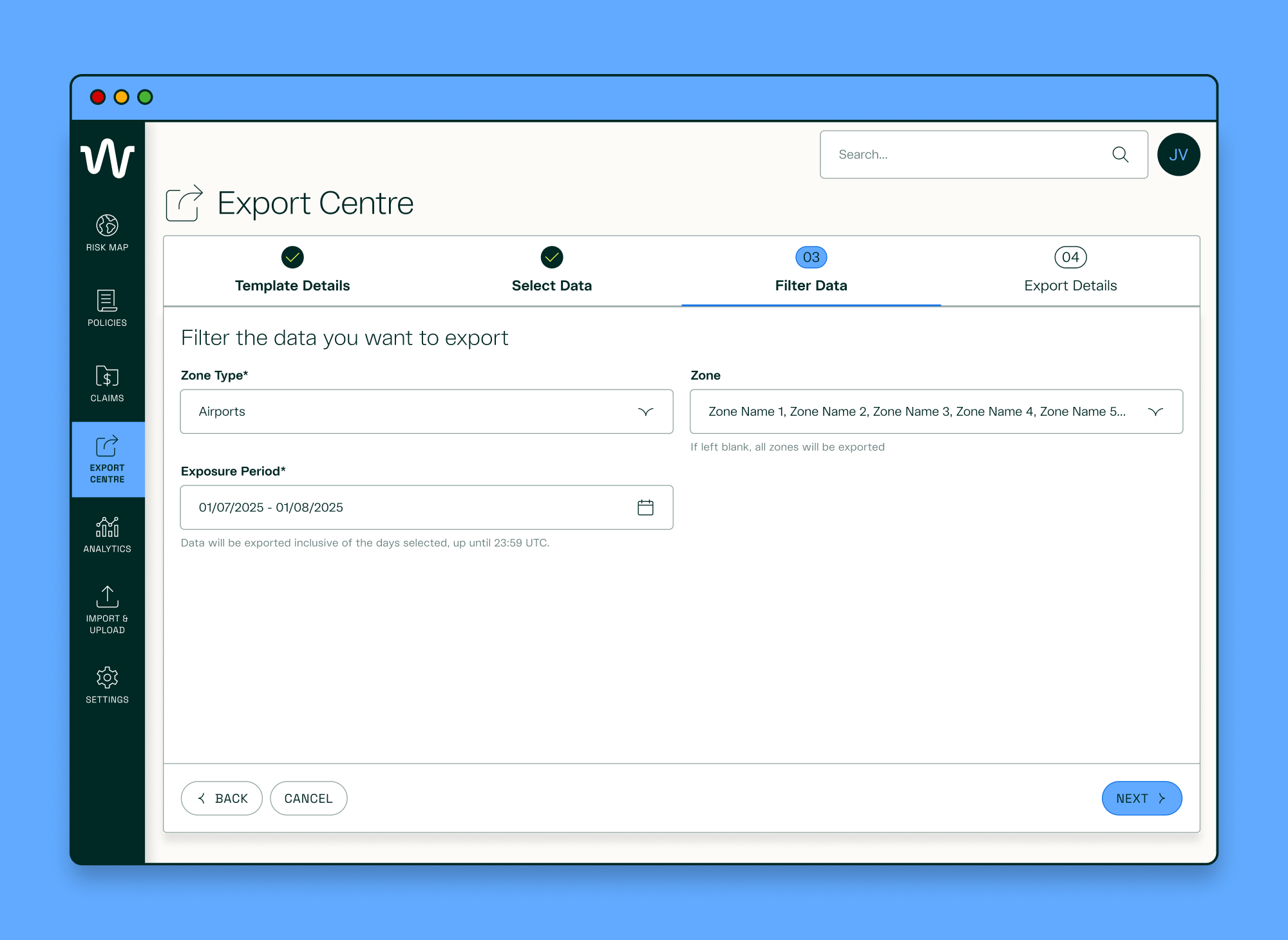
The uptake on the previous Historic Point-In-Time Exposure release was high, however, we noticed that users were using the feature to get ranges of time by using it multiple times in the same session, but with different points in time. After validating that this was the case, and with the addition that day ranges would also be useful, we designed a completely new Export Centre to help solve for this need.
zone exposure analytics
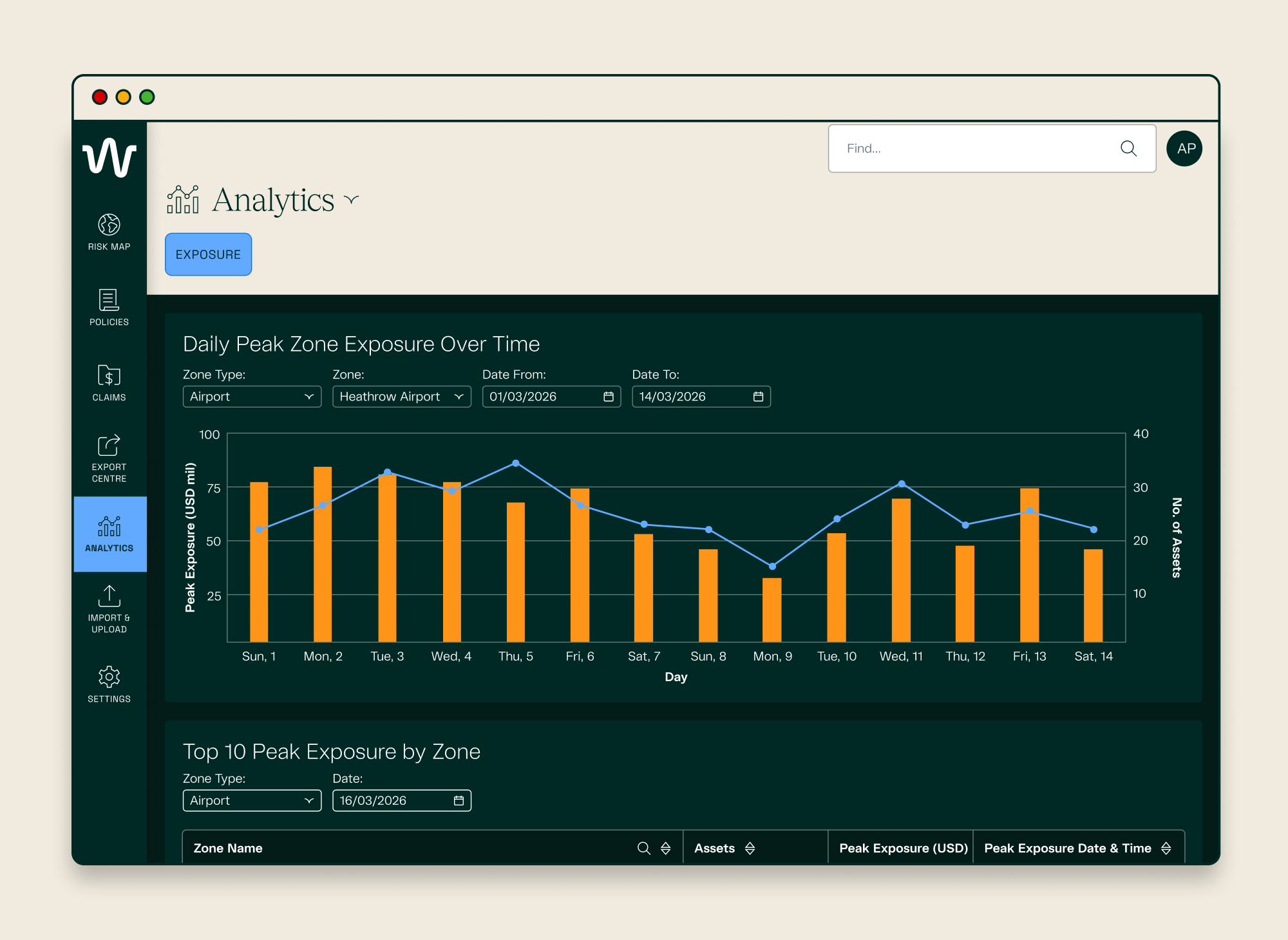
With all of the Historic Zone Exposure data on the platform, we wanted to create even more stickiness with our users by making it a source of insights and trends. With some further user interviews conducted, we also realised that users were looking at peaks, minimums and average exposure in zone for their forecasting and reporting.
OVERALL RESULTS
OVERALL RESULTS
CLIENTS
From the start of 2025, there were 6 leads that turned into 2 new clients (33.33%) that purchased for the Aviation Exposure module.
We had 8 existing Aviation Exposure clients and retained 8 of them (100%).
We also had 2 existing Marine Control clients that purchased the Aviation Exposure module to their contract.
learnings
The communication and integration of our client’s feedback in terms of what would be in the roadmap, and in what order, helped them feel like they were being listened to and allowed expectations to be set across the entire year.
This has now set Insurwave up to go into the Marine line of business to offer a very similar product offering, however, will require user interviews to validate if there are any changes or nuances specific to that line of business that will need to be considered.